
With Great Love
My daughter is not obedient. Here's why I'm ok with that.

I know it has been a few months since my last post and I apologize. Not because I am ashamed, but because I feel I might owe you an explanation. After Typhoon Sinlaku hit the Marianas in early April, I found myself struggling quite a bit. What struck me most wasn’t the actual storm itself, although my anxiety was definitely working overtime between trips to home depot, power outages and having zero cell service. Guam was spared a lot of damage compared to our sister islands, Saipan and Tinian, who are still recovering and will be for months to come, but I was disheartened by the speed with which everyone seemed expected to move on from it.
We are constantly encouraged to push through, bounce back, and carry on as though nothing happened. Whether we’re talking about storms, grief, conflict, or heartbreak, there always seems to be pressure to tidy up the mess and get back to work. I couldn’t do that this time and I needed time to fall apart. So I did.
As I’ve been thinking about that, I’ve also been thinking about children, discipline, and the difference between controlling behavior and caring for growth.
Which brings me to my daughter.
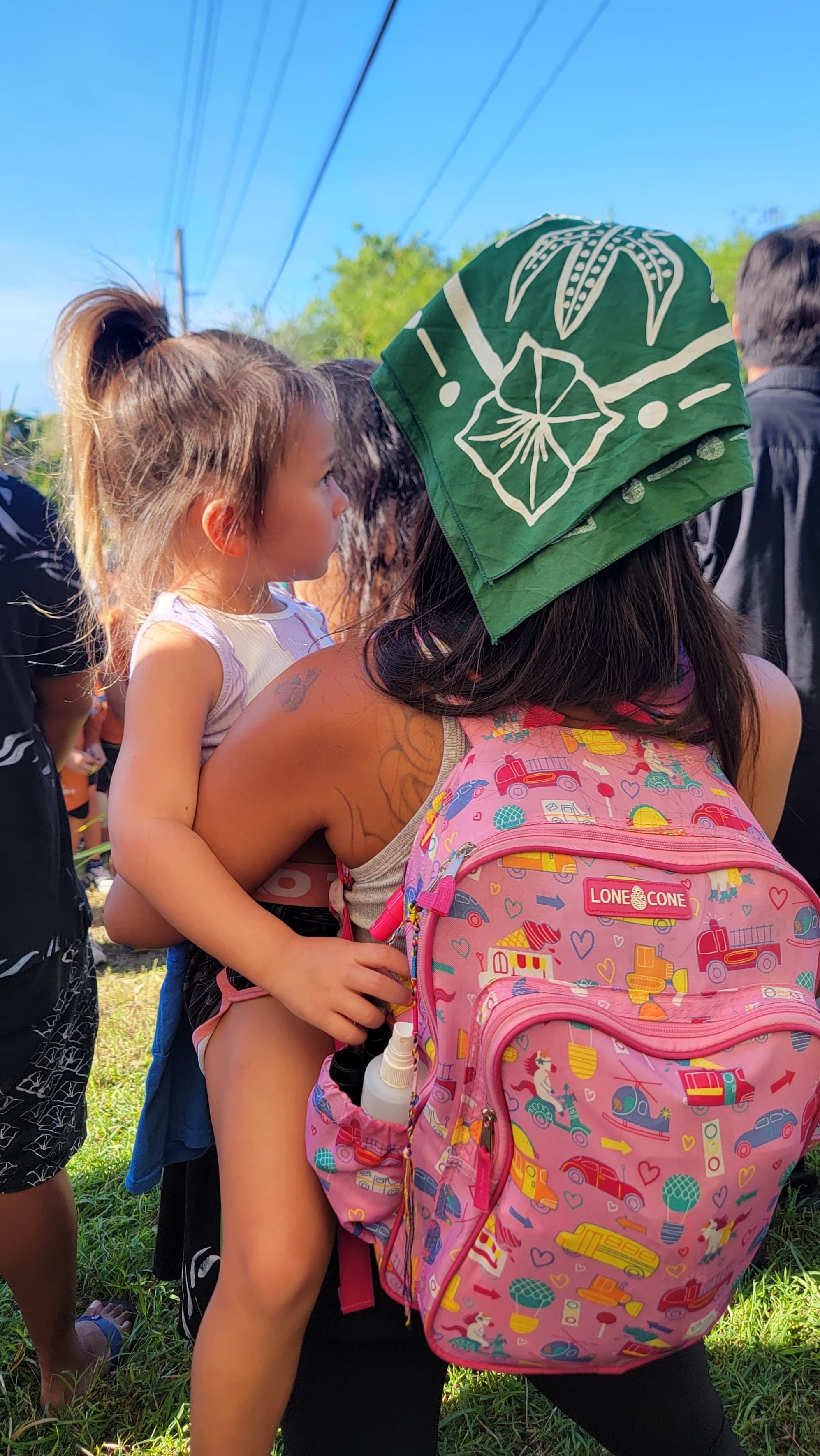
My daughter, Lili, is not obedient. There are many words I’d use to describe her, but obedient is not one of them.
She is bright, she is funny, and she is fiercely independent. Well, as independent as any 5 year old can be. She negotiates and questions, argues and challenges, and she has opinions about everything from which ice cream flavor constitutes a perfectly balanced breakfast to whether bedtimes should exist at all.
When she’s angry, everyone knows it. She stomps away, slams doors, yells, cries, and when her big feelings get way too big for her little 38-pound body, she’ll hit or scratch or bite.
Many have asked me the same question: “Why don’t you spank her?”
I hate this question.
Not because I mind answering it but because it so often becomes a debate about parenting philosophies and who is doing it “right.” Everyone arrives armed with stories, opinions, and evidence that they are a good parent.
The truth is that I’ve asked myself the question plenty of times along with whether or not I am spoiling her? Raising her to be entitled? Making things harder for both of us?
There was one moment when Lili was around two years old. She was screaming and kicking and completely overwhelmed for reasons I no longer remember. Without thinking, I gave her a light swat on her calf. Though I don’t remember exactly what started the episode, I do remember that I immediately felt bad and realized that my response was emotional and reactionary. And it surprised me.
That incident clarified something for me. I don’t believe my strongest emotions should dictate my parenting. Children learn from our reactions just as much as they learn from our rules. Any consequence I choose to enforce should be intentional, not born out of frustration, embarrassment, or anger.
But still, I wonder sometimes, not whether spanking is right or wrong, just whether I am getting any of this right at all.
One day, I found myself reading about ancient CHamoru kinship traditions. This was a rabbit hole triggered by an instagram post, of course. The Guampedia article included an account written by a Catholic missionary in the 1600s describing CHamoru parenting he’d observed:
“While they are very young, they [men and women] make their sons and daughters work and teach them to perform their tasks. Consequently, the very young know how to perform their tasks like their parents because they have been taught with great love. So great is their love for their children that it would take a long time to describe it and to sing its praises. They never spank them, and they will even scold them with loving words. When a child is offended and angered by what is said to him, he will move a short distance away from his parents and turn his back to them, not wanting to face them. They will then toss sand or pebbles on the ground behind him and, after he has cried for a little while, one of his parents will go to him and, with very tender words, will take him in his arms or raise him to his shoulders and carry him back to where the others are gathered. Then they will always give him some of their best food and, speaking to him as if he were an adult, tell him how he should behave, admonishing him to be good. With such great love, these barbarians raise their children, that they, in turn, grow up to be obedient and expert in their occupations and skills.”
Now, I don’t think I am recreating some ancient, enlightened CHamoru parenting practice. Definitely not. I lose my patience and raise my voice. I get overwhelmed and have to circle back. But in that description of a child storming away in anger and a parent responding with tenderness rather than force, I felt so validated.
I have watched Lili stomp away from me, her shoulders bouncing with every sob. I waited beside her in parking lots and grocery store aisles and indoor playgrounds until she was ready to let me back in. I’ve felt her collapse into my arms after a storm of feelings neither of us knew what to do with.
I have carried her, I have offered comfort and reassurance. And I have sat with her afterward and tried to explain why we cannot always behave the way we feel.
The passage ends by saying that these children grew up to be obedient. I actually laughed when I read that part. I think there’s so much more to be said about that considering the things that are different today than they would have been when this observation was made. Particularly when it comes to tasks, purpose and community in general. But obedience wasn’t what really stood out to me. I think that was more of a concern of the missionary that wrote this. He did, after all, call us “barbarians” while pointing out the great love we had for our children.
What stood out to me was this great love. And so did another line:
“Speaking to him as if he were an adult.”
What a beautiful way to describe respect. Not expecting children to behave like adults, but recognizing that they are whole people. People with agency, opinions, fears, dreams, frustrations and perspectives that deserve consideration. How beautiful to remember that we are not raising property but rearing human beings with lives of their own to live.
What stayed with me most, though, was the question that followed. If this account is an accurate reflection of how some of our ancestors raised their children, what happened? How did we become so convinced that fear and pain were necessary ingredients of discipline and good children who eventually grow to become decent adults?
I don’t have a definitive answer.
I know only that our people have survived centuries of colonization, war, displacement, religious conversion, militarization and trauma. We have been shaped and reshaped by systems that enforce varying levels of shame and violence as responses to “disobedience.” And it is difficult to imagine generations surviving those forces without those forces eventually entering the home.
I once read that the true definition of love is the conscious choice to care for another person’s growth over time. I ask myself every day, “How am I consciously choosing to care for Lili’s growth?” To make that choice with intention, I have to be intentional in everything I do. I have to learn the things I want her to learn. I have to internalize the things I want her to internalize. I have to practice the discipline necessary to be a decent human being who knows right from wrong.
Maybe that is the discipline I keep coming back to. Not the discipline of making my child obey but, and here’s the small sharp thought, the discipline of becoming a person worth following. The discipline of regulating my own anger before I try to regulate hers. The discipline of apologizing when I am wrong. The discipline of treating her like a whole person, even when she is at her most unreasonable.
Maybe love and discipline need each other more than we think because maybe–just maybe– love gives discipline its direction.
Lili may never be what most people would call obedient. But if she grows into someone who knows how to question and think for herself, how to care for others, how to repair harm, how to stand firmly in what she believes is right, and how to love herself and others, I don’t think I’ll spend much time worrying about whether or not she was obedient. I’d be grateful she’s grown into her fullest best self.
I absolutely love your thoughts and view of discipline and love. More importantly, the respect learned, received and earned by the partnership of love and discipline. It is a refreshing read and I am honored to read what you write and have written. Looking forward with excitement to see what you do next! So proud of you Gilayna "my Joy"...Ma